


Read time 6 minutes
First off, thank you, Universe. Every day, I wake up feeling blessed. Recovery isn’t linear, nor is health, but both are worth fighting for. If you’re reading this blog, welcome to my world of reflection and resilience.
The First Whispers

It began with whispers. Not voices, but signals that were strange, insistent and impossible to ignore. A twitch that wouldn’t stop. A stiffness that clung like an invisible weight. I told myself it was stress, or coffee, or nothing at all.
But the whispers grew louder. My legs jerked at night as if they had their own secret agenda. My arms locked when I tried to rest. My body felt like a house with faulty wiring, lights flickering, circuits misfiring.
In 2016, the mystery finally had a name: Isaacs’ Syndrome. The doctor’s words were clinical, but to me, it was as if my body had turned into a haunted house.
I thought that was the end of the story. But the house had more rooms to open:
Lyme disease crept in. Glaucoma dimmed my vision. My kidneys faltered. Then came IBS, diabetes, frozen shoulder, eczema, and high blood pressure. Each time another passenger boarded a train, I couldn’t stop.
Then a thought broke through the noise: maybe the fight wasn’t against each monster alone. Maybe the only way out was to step back and see the whole maze.
To The Point: A New Lens of Systems Thinking
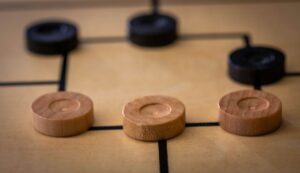
Around this time, I stumbled upon the idea of systems thinking. It is simple at its core: don’t just look at the parts, look at how they connect.
Calm in chaos: In hospital corridors and crisis moments, I found I could still think clearly.
Lessons from the 2007–2009 Market Crisis and My Health Crisis
| 2007–2009 Market Crisis | My Health Crisis | Actions I Took | How It Benefited Me |
|---|---|---|---|
| Volatility spikes | Symptom flare-ups | Paused, breathed, and delayed decisions until I regained composure; checked facts before acting | Clearer judgment; fewer impulsive mistakes |
| Liquidity crunch | Energy and time shortage | Carved out daily rest windows, reduced commitments, and asked for help to preserve energy reserves | Stayed operational long enough to adapt and recover |
| Leading indicators | Early warning symptoms | Built a simple dashboard of early signs; logged patterns and set low-threshold triggers for action | Caught problems early; avoided escalations |
| Model failures | Treatment plans breaking down | Ran quick contingency plans, switched therapies methodically, and kept fallback options ready | Smooth transitions; avoided total plan collapse |
| Market scenario planning | Good, moderate, bad health days | Wrote three clear playbooks (good/moderate/bad) with step-by-step actions for each | Reduced panic; faster, calmer execution |
| Short-term noise | Minute-by-minute anxiety | Set aside decision windows and practiced zooming out to weekly/monthly views before choosing | More strategic choices; less reactivity |
| Client panic | Caregiver and patient fear | Gave short, repeated updates; named next steps and boundaries; reassured with actions, not promises | Built trust; people stayed aligned and calmer |
| Concentrated exposure | Single reliance on one coping strategy | Layered approaches across nutrition, pacing, therapy, meds, and social supports | If one failed, others kept me afloat |
| Trade documentation | Ad hoc care decisions | Kept a concise log of symptoms, tests, decisions, and outcomes for each episode | Better handoffs, faster learning, clearer hindsight |
| Risk contagion | Trigger cascades across systems | Identified top triggers, set hard boundaries, and removed or limited exposures proactively | Fewer cascading failures; steadier baseline |
| Cycle recognition | Remission and relapse cycles | Explicitly labeled phases and matched a checklist of actions to each phase | Realistic expectations; phase-appropriate responses |
| Communication breakdowns | Confused or conflicting medical messages | Wrote summaries for doctors and caregivers; confirmed mutual understanding each time | Clearer care plans; fewer misunderstandings |
| Capital reallocation | Energy budgeting | Reallocated time to high-impact rest and work; ruthlessly declined low-yield tasks | Higher energy ROI; less burnout |
Bottom Line:
This isn’t about perfection. It’s about agency: breathe, widen the lens, discipline, hold hands, take one clean step and wisdom.
The Loops I Had to Break
One of the biggest discoveries was feedback loops.
There was the vicious loop:
- Pain → Stress → Sleeplessness → More pain.
And then there was the healing loop:
- Calmness → Better sleep → Less pain → More calmness.
Once I saw these loops, I realised I had a choice. I couldn’t erase my conditions, but I could choose which loops to feed.
Maintain Boundaries as a Survival Tool

Over time, I understood what boundaries meant, not as rules for others, but as mercies I owed myself.
I had been a machine of years, smiling through cracks, pretending the wound wasn’t widening. Each time I ignored the limit, my body shouted back with a flare-up that left me raw and hollow.
So, I started to refuse. I learned the hard, quiet power of a single syllable: no. No to invitations that emptied me; no to late-night scrolling that stole sleep; no to the guilt that tried to distract while I healed. Saying no stopped being an admission of weakness and became a tactic for survival.
Resilience Through Adaptability

At first, I resisted change. I wanted my old life back, the one before diagnoses, before pills, before endless hospital corridors.
But…
Systems thinking taught me that resilience isn’t about going back. It’s about adapting.
So I adapted:
I worked in shorter durations instead of long marathons.
I used assistive tools when my eyes were weak.
I found joy in small rituals: a cup of chai, a walk at sunset, a phone call with a friend.
I stopped fighting the system and started flowing with it.
The Network That Held Me
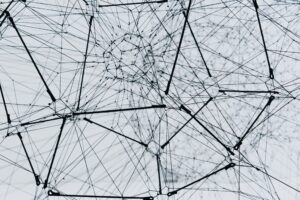
No system works alone. Just like organs in the body, people form networks too.
Doctors, therapists, caregivers, friends, online communities, they all became part of my healing system.
For years, I thought asking for help was a weakness. But I learned that collaboration is a strength. My system was bigger than just me.
From Patient to Problem‑Solver
The first time I remember feeling like a stranger in my own body, I was sitting in a wheelchair in a fluorescent-lit waiting room, a paper cup with coffee trembling in my hand. The magazines tasted like someone else’s life.
Charts, test results, and polite faces folded into one long sentence: you are a patient. And this identity wrapped around me like wet clothes. Night after night, I catalogued pain. Appointments stacked into a column on my calendar, and side effects became background noise.
Then a small curiosity slipped in through the cracks. Instead of asking Why me, I began asking What’s really happening here.
My workshop began in quiet ways. I swapped coffee for green tea in the morning and noted the difference. I shifted a routine by ten minutes and watched how an afternoon flare softened. Slowly, each setback became data, each triumph a clue.
Illnesses did not dissolve overnight. But my posture changed. The tremor of helplessness eased into a steady attention. The most radical thing I learned was that control is not a myth reserved for the healthy.
Chaos slowly became a map I could sketch, simple notes, small experiments that taught me what helped and what didn’t.
I remained a patient and grew into a problem‑solver…
This change didn’t promise a cure; it gave me something steadier: a quiet agency.
What shifted for me:
I stopped reacting and started observing patterns.
I connected the dots instead of treating each illness in isolation.
I turned setbacks into experiments rather than failures.
I reclaimed agency by writing parts of my own story.
Closing the Circle

Today, the uninvited guests no longer run the house. I am healthier with small choices stitched together into steady practice. I move through the day with quieter confidence and a gentler patience. I’ve learned to read the patterns, to respect the boundaries, to strengthen the loops that help me heal.
The maze hasn’t disappeared completely, but I’ve drawn my own map.
And maybe that’s the real lesson: we don’t always get to choose the system we’re born into. But we can learn to navigate it, shape it, even thrive within it.
DISCLAIMER
The views expressed in this article are the author’s own and do not represent any medical advice.